


Auckland Marathon lands on Sunday 1 November. Queenstown follows on Saturday 14 November, with Rotorua the same weekend. If you're reading this in mid-late August, you're sitting somewhere between eleven and thirteen weeks out — which is almost exactly where a standard marathon block begins. Your long runs are about to get considerably longer, and the demands on your body are about to change.
That timing matters, because the supplements worth taking for endurance running aren't the ones you grab in race week. They're the ones you start using now, test through your build, and arrive at the start line already comfortable with. This guide covers the best supplements for runners NZ athletes can actually rely on in 2026 — what each one does, when to take it, and which products are worth your attention.
Before You Buy Anything: The Boring Bit That Matters Most
No supplement will rescue a training block you haven't done. Consistent mileage, adequate sleep, and eating enough food account for the overwhelming majority of your race-day result. If you're running 60 kilometres a week on six hours of sleep and skipping breakfast, fix that first.
What supplements genuinely do is close specific, predictable gaps that show up in endurance training — the ones you can't easily solve with food alone during a run, or that get harder to meet as volume climbs. Sodium loss over a three-hour effort. Carbohydrate intake while moving at pace. Protein turnover on a heavy training week. Those are real problems with real solutions, and that's where the products below earn their place.
The Top 7 Supplements for Runners in NZ
1. Electrolytes — The One Most Runners Get Wrong
Sweat isn't just water. You lose sodium, potassium, magnesium and chloride with it, and sodium losses in particular vary enormously between individuals — anywhere from around 400mg to well over 1,500mg per litre of sweat. Drinking plain water through a long run replaces the fluid but dilutes what's left, which is why some runners finish a hot session feeling worse despite drinking plenty.
Spring and early summer racing in New Zealand adds a wrinkle. You'll have done most of your build in cool winter conditions, then race in November when it's meaningfully warmer. Sweat rates climb, and a hydration strategy that worked in August can fall apart on race day.
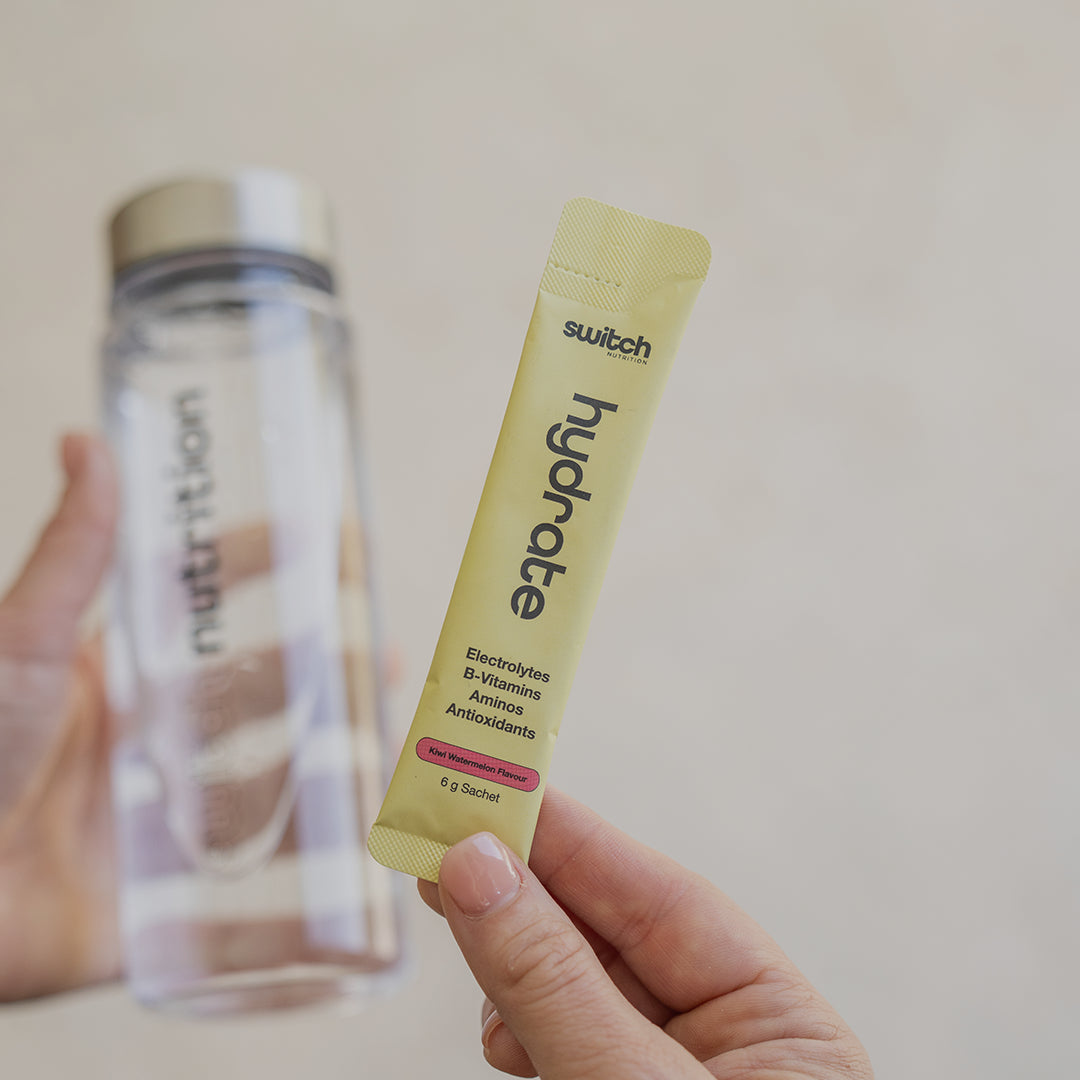
Aim for roughly 500–1,000mg of sodium per hour on runs beyond 90 minutes, adjusted for how heavily you sweat. Pillar Performance Electrolyte Hydration is a clean, well-dosed option built for endurance athletes, and the sparkling electrolyte version suits anyone who struggles to drink enough flat fluid. GHOST Hydration is the pick if flavour is what actually gets you drinking. For race morning or the drive home, the ready-to-drink hydration range saves you mixing anything.
If you want to go deeper on choosing between formulas, our electrolyte drink mix guide for athletes breaks down what to look for on a label. You can browse the full electrolytes and hydration range here.
2. Carbohydrates and Energy Gels — Your Actual Race Fuel
Your muscles store enough glycogen for roughly 90 minutes of hard running. After that, without fuel coming in, pace drops and everything gets substantially harder. This is the wall, and it's almost entirely an energy problem rather than a fitness one.
Current guidance sits at 30–60g of carbohydrate per hour for efforts beyond an hour, and up to 90g per hour for a full marathon when using a mixed glucose-to-fructose formula, which absorbs through two separate pathways rather than competing for one. The critical point: your gut needs training too. Start practising your fuelling on long runs from week one of your block, not three weeks out.
- FUELR Isotonic Energy Gels — isotonic formulation means no water needed to wash them down, which is a genuine advantage on a course where aid stations are spaced out.
- Pillar Performance Energy Gel 30 — 30g of carbohydrate per gel, making your hourly maths straightforward.
- FUELR Caffeinated Energy Gels — save these for the back half. Caffeine reduces perceived effort when you need it most, but taking them early wastes the effect.
Explore the full carbohydrates and gels range to plan your race-day fuelling.
3. Whey Protein — Not Just for Lifters
Distance runners routinely under-eat protein, partly because it's been branded as a strength-training concern. In reality, high-volume endurance training increases protein requirements to roughly 1.6–2.0g per kilogram of bodyweight daily. For a 70kg runner, that's around 112–140g a day — difficult to hit consistently on a heavy training week, particularly when appetite is suppressed after a long run.
Protein preserves lean mass during periods of high energy expenditure, supports the repair of the muscle damage that eccentric loading in running causes, and helps you absorb training rather than just accumulate fatigue. Dymatize ISO100 Whey Protein Isolate is fast-digesting and very low in lactose, which suits sensitive stomachs after a hard session. Basic Supplements Whey Protein Blend is the straightforward everyday option for daily intake.
For a wider comparison, see our ranking of the best protein powders in NZ for 2026, or browse the complete whey protein collection.
4. Creatine — Yes, Really
Creatine has a reputation as a mass-building supplement, which has kept runners away from it for decades. That reputation is increasingly out of step with the evidence.
For a marathon runner, creatine isn't about the marathon itself — it's about everything surrounding it. It supports the strength and hill work that protects you from injury, assists glycogen storage in muscle, and helps maintain lean mass and bone density through a long, demanding block. There's also a growing body of research on cognitive and recovery benefits.
The honest caveat: expect roughly half a kilogram to a kilogram of water weight, held inside the muscle. Most runners find the trade-off worth it, but if you're chasing a specific race weight, factor it in. Skip loading protocols and take 3–5g daily, timing irrelevant. Pillar Performance Creapure Creatine Monohydrate uses the Creapure form, and Nexus Creatine Monohydrate is a solid unflavoured everyday choice.
Our full breakdown of the best creatine supplements in NZ for 2026 covers the options in more detail, and the whole creatine range is available here.
5. Beta-Alanine — For the Sessions That Hurt
Beta-alanine raises muscle carnosine, which buffers the hydrogen ion build-up that limits high-intensity efforts. Its strongest evidence sits in the one-to-four-minute range, which is exactly where your interval sessions and track repetitions live.
It won't change your marathon pace directly, but it makes the hard sessions inside your block more productive — and it helps with the final kick when you're emptying the tank over the last kilometre. It requires 3.2–6.4g daily over several weeks to build up, so it's a start-now supplement rather than a race-week one. The tingling sensation is harmless and fades with consistent use.
Our guide to the best supplements for hybrid training, endurance and stamina covers how beta-alanine stacks with other performance ingredients. Browse the beta-alanine range here.
6. Magnesium — The Recovery and Sleep Multiplier
Magnesium is involved in more than 300 enzymatic processes, including muscle contraction and relaxation, energy production and nervous system regulation. Runners lose it through sweat and burn through it under training load, and low intake shows up as poor sleep, restless legs, night cramps and a nervous system that won't settle after evening sessions.
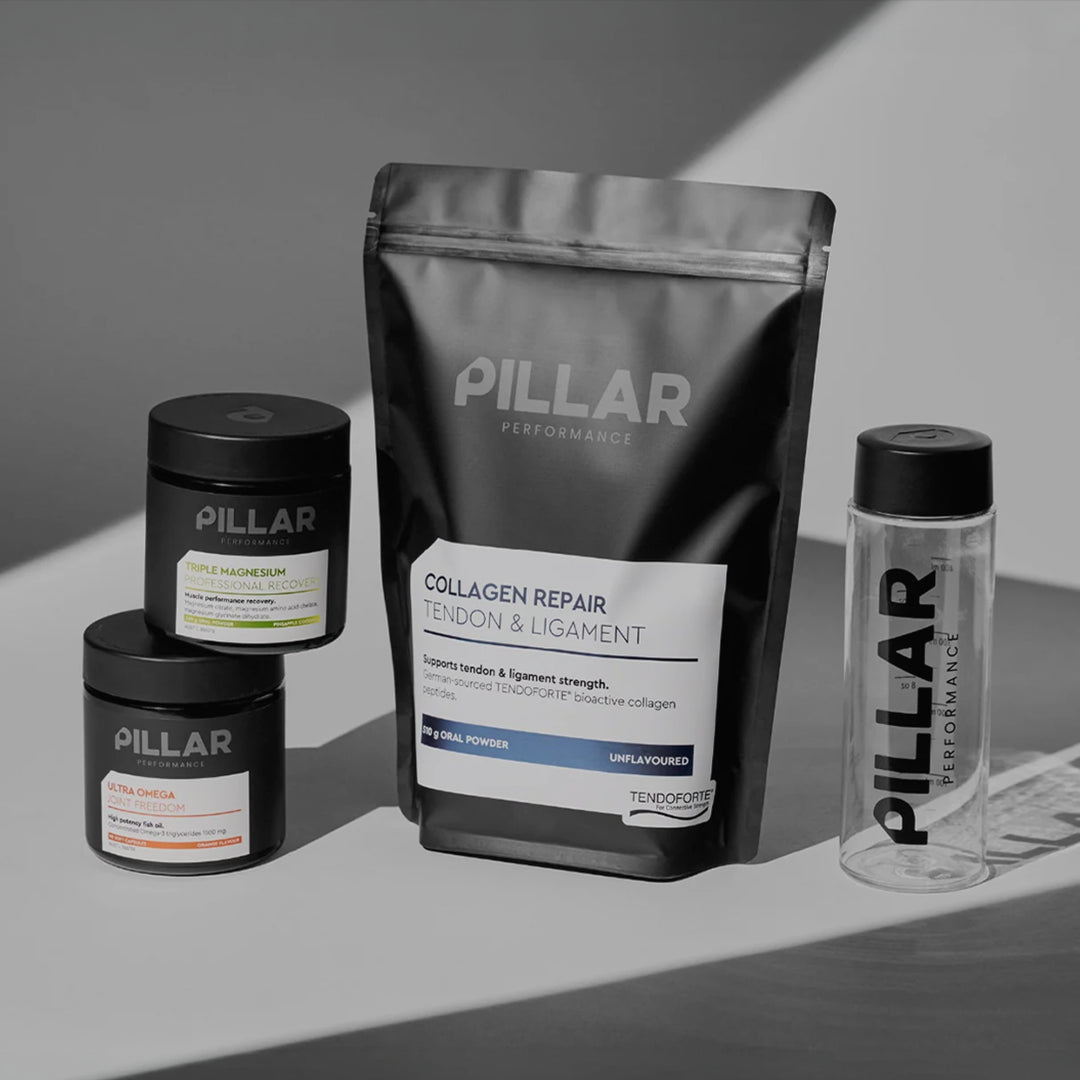
Sleep is where adaptation actually happens. If a heavy training block is wrecking your sleep, you're accumulating fatigue rather than fitness. Pillar Performance Triple Magnesium Powder uses three forms for broader absorption and is easy to take before bed, while the Triple Magnesium Tablets suit anyone who'd rather not mix another drink.
For a deeper look, read our article on magnesium deficiency symptoms and the best magnesium supplements in NZ, or our guide to the best sleep supplements for deep recovery. The full magnesium collection is here.
7. Collagen and Joint Support — Protecting the Structure
Running is repetitive impact loading. Over a marathon block, your tendons, ligaments and cartilage absorb hundreds of thousands of ground contacts, and connective tissue adapts far more slowly than muscle does. Achilles, patellar tendon and plantar fascia complaints are the classic mid-block casualties.
Collagen taken with vitamin C, roughly 30–60 minutes before loading, appears to support connective tissue synthesis when combined with the mechanical stimulus of running itself. Pillar Performance Collagen Repair is formulated for exactly this use case. For managing the general inflammatory load of high mileage, Pillar Performance Curcumin Advanced is worth considering alongside it.
Browse the collagen and joint support range for more options.
Don't Overlook Iron and Micronutrient Status
Iron deficiency is disproportionately common in distance runners, and disproportionately common in female runners in particular. Foot-strike haemolysis, sweat losses and increased demand all contribute. The symptoms — persistent fatigue, breathlessness at easy paces, stalled progress despite good training — are easy to misread as simply needing to train harder.
Iron is the one item on this page where you should get a blood test rather than guess. Supplementing without deficiency isn't helpful and can cause problems. Talk to your GP, and if you do need support, our vitamins and minerals range covers the essentials.
When to Take What: Quick Reference
| Supplement | Typical Amount | When |
|---|---|---|
| Electrolytes | 500–1,000mg sodium per hour | During runs over 90 minutes; daily in warm weather |
| Carbs / Gels | 30–90g carbohydrate per hour | Every 30–45 minutes on runs over an hour |
| Whey Protein | 25–40g per serve | Post-run, or to top up daily intake |
| Creatine | 3–5g | Daily, any time |
| Beta-Alanine | 3.2–6.4g | Daily, split doses to reduce tingling |
| Magnesium | 300–400mg | Evening, ideally before bed |
| Collagen | 10–15g with vitamin C | 30–60 minutes before running |
How to Phase It Across Your Block
Rather than starting everything at once, layer marathon training supplements in as the demands change:
Weeks 1–5: Base Building
Establish the daily foundations — creatine, magnesium and protein. Begin beta-alanine now so it's saturated by the time your sessions sharpen. Start collagen if you have a history of tendon niggles. Practise fuelling on every long run, even the ones that feel short enough to skip it.
Weeks 6–10: Peak Mileage
This is where the wheels come off for most runners. Hold everything from base phase, and increase your attention to electrolytes and recovery protein as volume peaks. Lock in your exact race-day gel and drink combination during your longest runs — same products, same timing, same quantities.
Weeks 11–13: Taper and Race Week
Change nothing. Taper week is not the time to trial a new gel flavour or a different electrolyte. Keep the daily supplements running, keep sleep and magnesium consistent, and top up carbohydrate intake across the final two to three days.
Three Mistakes Worth Avoiding
- Trialling anything new on race day. Every product you use on 1 November should have been used on at least three long runs beforehand. Gut tolerance is highly individual.
- Under-fuelling because it feels like cheating. Deliberately running long without carbohydrate to "train fat adaptation" has limited application for most amateur runners and frequently just produces poor sessions and slow recovery.
- Treating water as hydration. Volume without sodium doesn't solve the problem, and on a warm November race day it can create a new one.
Getting Started
You don't need all seven from day one. If you're starting from nothing, begin with electrolytes and race fuelling — they'll make the biggest immediate difference to how your long runs feel. Add protein and magnesium next, then layer in the rest as your mileage builds.
Eleven weeks is enough time to do this properly. It isn't enough time to leave it until October. Shop the full range of endurance and hydration supplements at ASN and get your build started this week.


Leave a comment
All comments are moderated before being published.
This site is protected by hCaptcha and the hCaptcha Privacy Policy and Terms of Service apply.