

Scroll through any fitness forum or TikTok comment section right now and you'll spot the same argument playing out: someone insists collagen is "useless" for building muscle, while someone else swears by their daily collagen scoop for joint pain that's vanished. Both might be right – because whey protein and collagen protein aren't actually competing for the same job.
If you're standing in front of the protein shelf wondering whether to grab a tub of whey protein powder or a jar of collagen peptides, this guide breaks down exactly what each one does, where the "collagen builds muscle" claims fall apart scientifically, and how to use both to your advantage.
What Is Whey Protein, and Why Is It the Muscle-Building Standard?
Whey protein is a fast-digesting, complete protein derived from milk during the cheesemaking process. It's been the go-to protein supplement for athletes and gym-goers for decades, and there's solid science behind why.
Whey contains all nine essential amino acids in generous amounts, including a particularly high concentration of leucine – the amino acid that acts as the primary trigger for muscle protein synthesis (MPS), the process your body uses to repair and build new muscle tissue after training. A typical serving of whey delivers roughly 2.5–3g of leucine, comfortably clearing the threshold research suggests is needed to maximally stimulate MPS in most adults.
Whey is also rapidly absorbed, making it a popular choice immediately after training when your muscles are primed to take up amino acids. This is the core reason whey has remained the benchmark protein for muscle growth, recovery, and strength gains.
Whey Protein Options to Suit Different Goals
Not all whey is created equal, and your choice often comes down to budget versus performance priorities:
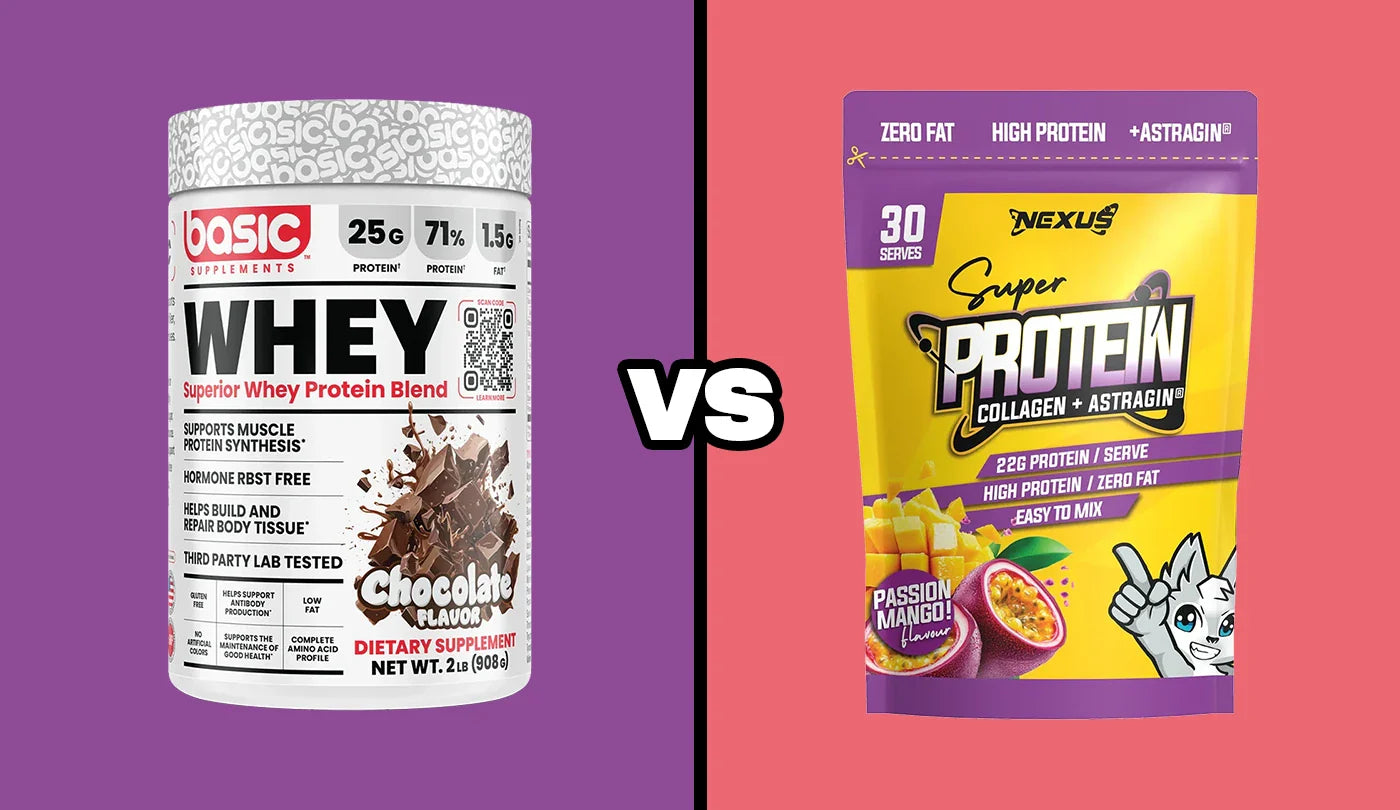
- Basic Supplements Whey Protein Blend is a solid, no-fuss everyday option – easy to digest, hormone-free, and ideal if you're after consistent daily protein intake without overthinking it.
- Radix Nutrition Natural Whey Protein sits at the premium end, made from ultra-filtered, NZ-sourced grass-pastured milk with an exceptionally high DIAAS score (a measure of how well your body actually absorbs and uses the amino acids) – a great pick if you want to optimise every gram for muscle repair.
For a deeper dive into how the top options stack up, have a read of our Best Protein Powder NZ 2026 round-up.
What Is Collagen, and Why the "Useless for Muscle" Claims Have Some Truth to Them
Collagen is the most abundant protein in the human body, making up the bulk of your skin, tendons, ligaments, cartilage, and bone matrix. Supplement brands love pointing out that collagen technically makes up a large share of total body protein, and some marketing goes a step further, implying that taking collagen powder directly fuels muscle growth in the same way whey does.
Here's where the science gets more nuanced. Collagen is an incomplete protein – it's missing or very low in tryptophan, and critically, it contains far less leucine than whey (often less than half, gram for gram). Since leucine is the key driver of muscle protein synthesis, collagen on its own is a noticeably weaker stimulus for building new muscle tissue compared to whey. Several controlled studies comparing the two head-to-head have found whey outperforms collagen for stimulating MPS, particularly after resistance training.
So if your goal is purely "build as much muscle as possible," collagen isn't going to do the heavy lifting that whey does. But that doesn't make collagen useless – it just means it's solving a different problem.
Where Collagen Actually Shines
Collagen's amino acid profile (rich in glycine, proline, and hydroxyproline) is precisely what makes it so effective for connective tissue – the tendons, ligaments, and cartilage that whey simply isn't built to support in the same way. Research on collagen peptides paired with vitamin C (which is essential for the body's own collagen synthesis) has shown genuine benefits for:
- Joint comfort and mobility, particularly in active adults and ageing joints
- Tendon and ligament resilience, reducing strain-related niggles from repetitive training
- Skin elasticity, hair, and nail health
- Gut lining support, often cited alongside digestive health benefits
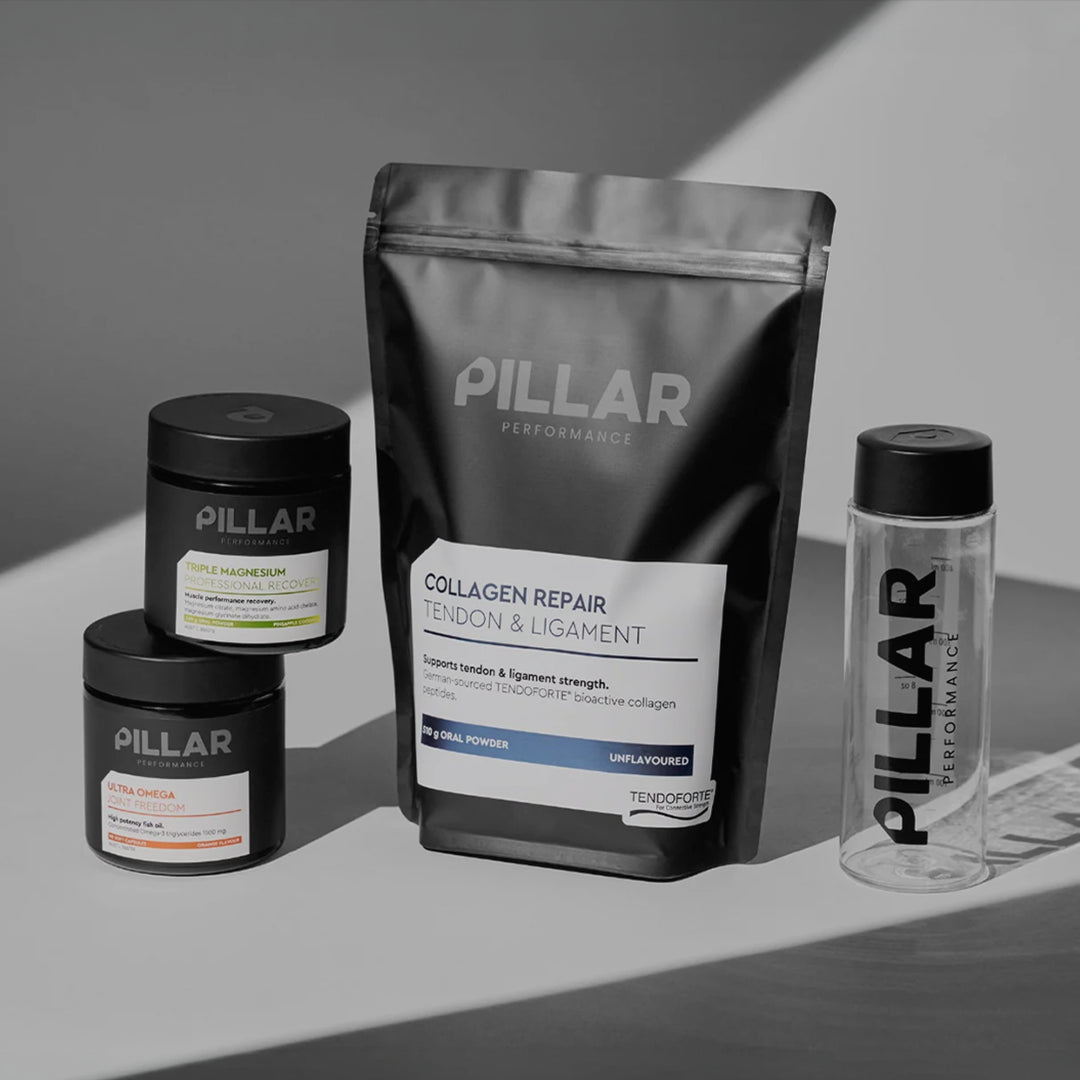
This is why collagen has become a staple in recovery and longevity-focused supplement stacks rather than muscle-building ones. If joint health or connective tissue support is your priority, Pillar Performance Collagen Repair is purpose-built for this, using clinically trialled Tendoforte® collagen peptides specifically studied for tendon and ligament strength, plus added vitamin C to support your body's own collagen production.
For more on this side of collagen's benefits, our article on collagen for joint health in athletes and active adults goes into more depth.
Whey vs Collagen: A Side-by-Side Comparison
| Feature | Whey Protein | Collagen Protein |
|---|---|---|
| Amino acid profile | Complete (all 9 essential amino acids) | Incomplete (low/no tryptophan) |
| Leucine content | High – strong trigger for muscle protein synthesis | Low – minimal direct muscle-building stimulus |
| Best for | Muscle growth, strength gains, post-workout recovery | Joint comfort, tendon/ligament resilience, skin and gut support |
| Absorption speed | Fast | Fast, but used differently by the body |
| Dairy-free option? | No (unless isolate/lactose-free formulas) | Yes – most collagen is dairy-free by nature |
| Typical timing | Post-workout or between meals | Daily, any time, often with vitamin C |
So, Which Should You Be Drinking – and When?
The honest answer is: it depends on what you're training for, and the good news is you don't have to pick a side.
If Your Goal Is Building Muscle or Strength
Whey should be your primary protein source. Aim to have a serving within an hour or two either side of resistance training, and use it to help hit your overall daily protein target. If you're dairy-sensitive or prefer to avoid whey altogether, Basic Supplements Hydrolyzed Clear Beef Isolate is a genuinely good alternative – it's a complete, fast-absorbing protein with a light, juice-like texture rather than the usual creamy shake, and it sidesteps lactose entirely while still supporting muscle repair.
If Your Goal Is Joint Health, Recovery, or Skin Support
Collagen is the better daily pick here, and timing is more flexible since you're not chasing a post-workout MPS window. Many people take it first thing in the morning with a source of vitamin C, or simply mix it into coffee or a smoothie as part of a daily routine. Consistency matters more than precise timing – most studies showing joint benefits used daily collagen intake over 8–12 weeks or longer.
If You Want Both, Without Overcomplicating Your Routine
This is where a hybrid product like Nexus Super Protein Water can be handy. It combines hydrolysed collagen peptides with vitamin C and gut-supportive ingredients in a convenient, dairy-free, ready-to-drink format. It won't replace whey as your dedicated muscle-building protein, but it's a genuinely useful way to get a collagen top-up throughout the day, particularly if you're already getting your leucine needs met elsewhere through meals or a separate whey shake.
A simple, practical structure many people land on:
- Post-workout: whey protein (or a dairy-free isolate alternative) for muscle repair
- Daily, separate from training: a collagen supplement for joints, tendons, and skin
If you're also fine-tuning when you eat relative to your workouts, our guide on protein timing for muscle growth is a useful next read.
The Bottom Line
Whey and collagen aren't rivals – they're tools for different jobs. Whey is the protein you reach for when the goal is building and repairing muscle, thanks to its complete amino acid profile and high leucine content. Collagen earns its place for what it does best: supporting the tendons, ligaments, cartilage, and skin that keep you moving well in the first place. Rather than asking "which one is better," the more useful question is "what am I actually trying to support?" – and for most active Kiwis, the answer is often both, just used for different reasons.

Leave a comment
All comments are moderated before being published.
This site is protected by hCaptcha and the hCaptcha Privacy Policy and Terms of Service apply.