

Joint health is one of the most important — yet often overlooked — foundations of athletic performance and long-term mobility. Whether you’re training hard, staying active as you age, or managing the wear and tear of sport, supporting your joints becomes essential for movement quality, recovery and longevity.
That’s where collagen supplements have gained significant attention. Increasingly used by both athletes and active adults, collagen is now recognised as one of the most effective nutritional strategies for supporting connective tissue health, joint comfort and injury resilience.
In this guide, we’ll explain how collagen supports joints, whether it’s worth taking for athletes, and how to choose the best collagen supplement for joints in NZ.

What Is Collagen and Why Does It Matter for Joints?
Collagen is the most abundant structural protein in the human body. It forms the foundation of connective tissues including cartilage, tendons, ligaments, fascia and bone. These tissues allow joints to move smoothly, absorb impact and maintain stability under load.
For athletes and active individuals, collagen turnover is constant. Training, impact, repetitive movement and ageing all increase collagen breakdown, which can gradually reduce tissue integrity if not supported nutritionally.
This is why collagen for joint health has become a key strategy in sports nutrition and active ageing. Supplementing collagen provides the amino acid building blocks — particularly glycine, proline and hydroxyproline — required for connective tissue repair and maintenance.
Is Collagen Worth Taking for Athletes?
Yes — collagen supplementation is increasingly supported by sports science for athletes, especially those exposed to repetitive loading, high impact or joint stress.
Research shows collagen peptides can support:
- Joint comfort during activity
- Cartilage integrity
- Tendon and ligament resilience
- Injury recovery support
- Training longevity
Unlike muscle-focused proteins such as whey, collagen specifically targets connective tissue structures. This makes it particularly relevant for runners, lifters, field athletes, HYROX competitors and ageing athletes who place ongoing stress on joints.
For athletes managing previous injuries or high training loads, collagen can play a valuable role in tissue repair support alongside strength training and rehabilitation.
Does Collagen Actually Help with Joints?
Evidence suggests collagen peptides can positively influence joint health, particularly when combined with loading or exercise.
Studies indicate collagen supplementation may help:
- Support cartilage metabolism
- Improve joint comfort during activity
- Enhance connective tissue repair
- Reduce exercise-related joint discomfort
One key mechanism is the stimulation of collagen synthesis within connective tissues. When specific collagen peptides are consumed, they circulate in the bloodstream and accumulate in cartilage and tendons, signalling tissue repair processes.
This is especially relevant for ageing athletes, as natural collagen production declines with age. Supporting collagen intake may therefore help maintain joint integrity and mobility over time.
Why Athletes and Active Adults Lose Collagen Over Time
Collagen degradation occurs naturally with ageing but is accelerated by mechanical stress and lifestyle factors. For active individuals, the main contributors include:
- High training loads
- Impact and repetitive movement
- Previous injuries
- Inflammation
- Reduced collagen synthesis with age
This combination explains why joint stiffness, tendon irritation and connective tissue discomfort often increase over time in both competitive athletes and recreational exercisers.
Supporting collagen intake becomes particularly valuable from the mid-30s onwards, when collagen synthesis begins to decline more noticeably.
Which Type of Collagen Is Best for Athletes?
The most effective collagen supplements for joint health are hydrolysed collagen peptides, particularly those rich in Type I and Type III collagen.
These forms are:
- Highly bioavailable
- Easily digested and absorbed
- Clinically studied for connective tissue support
- Suitable for daily use
Hydrolysed collagen (also called collagen peptides) has been enzymatically broken down into smaller chains, allowing efficient absorption and delivery to connective tissues.
Many advanced joint collagen formulas also include co-factors such as vitamin C, which plays a crucial role in collagen synthesis within the body.
The Best Collagen Supplement for Joints in NZ
When choosing the best collagen supplement for joints in NZ, athletes should look for products specifically formulated for connective tissue repair rather than general beauty collagen.
Key features to prioritise include:
- Clinically researched collagen peptides
- Athlete-safe formulation
- Added vitamin C or co-factors
- Evidence-based dosing
- Trusted sports nutrition brand
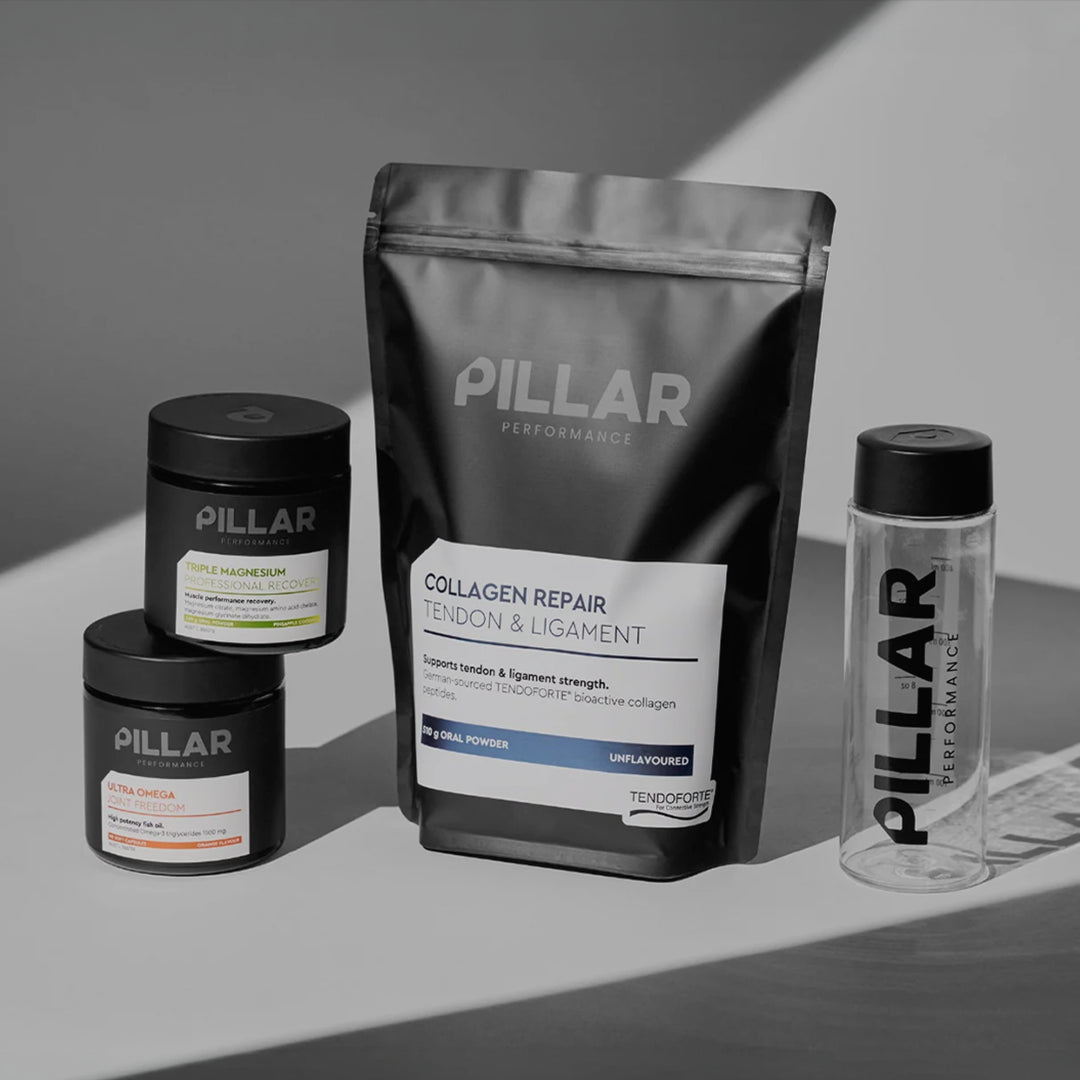
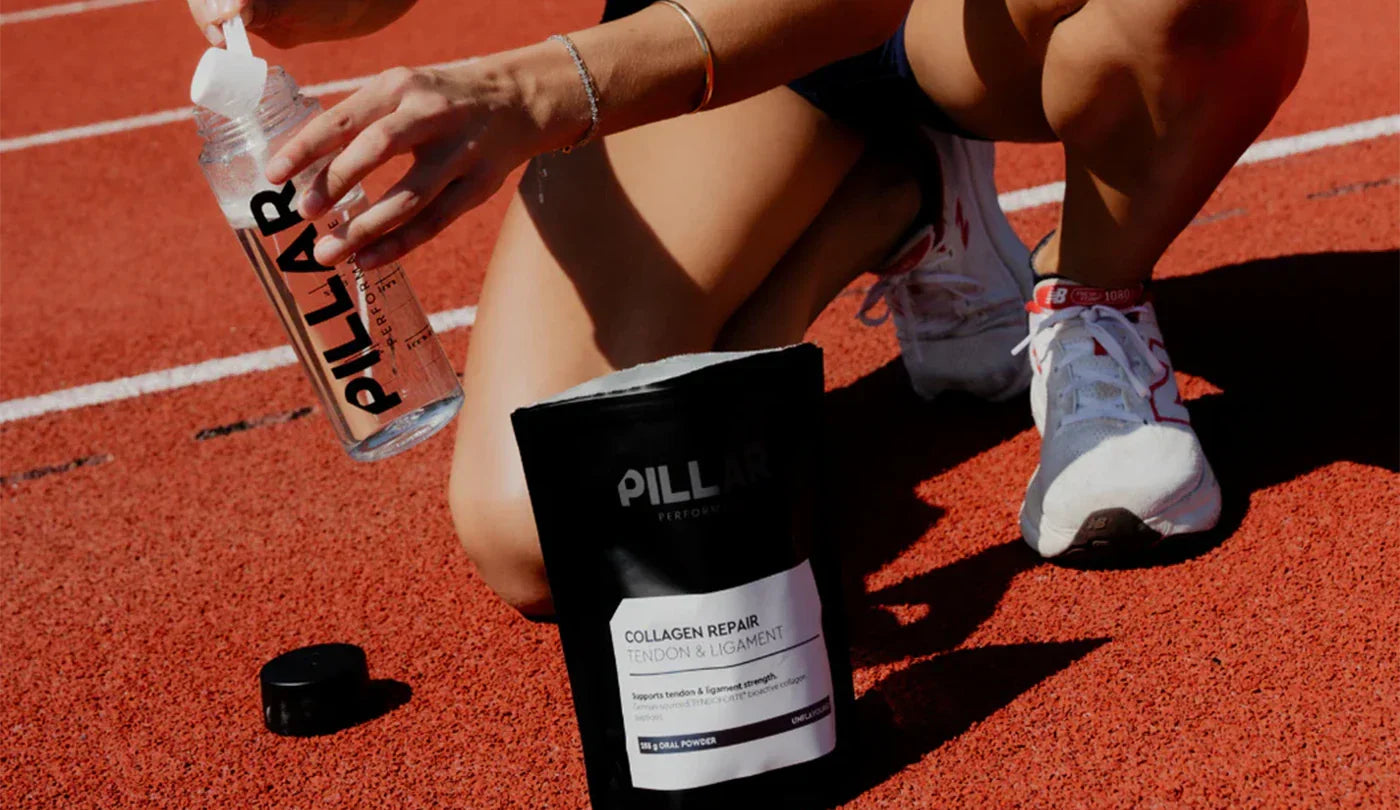
One of the most advanced options available is Pillar Performance Collagen Repair.
Designed specifically for athletes and active individuals, this formula delivers targeted collagen peptides alongside vitamin C to support tendon, ligament and cartilage health. It’s widely used in elite sport and by active adults aiming to maintain joint resilience and recovery.
You can explore the full range of options in the collagen and joint support supplements collection.
How Collagen Supports Performance and Recovery
Healthy connective tissues allow efficient force transfer between muscles and joints. When collagen integrity declines, movement efficiency and resilience can suffer.
For athletes, collagen support may contribute to:
- Improved load tolerance
- Reduced injury risk
- Faster tissue recovery
- Joint comfort during training
- Longevity in sport
This is why collagen is increasingly included in performance nutrition strategies alongside protein, creatine and electrolytes.
Collagen for Ageing Athletes and Active Adults
Joint health becomes a major determinant of activity levels with age. Maintaining mobility, comfort and tissue resilience allows continued participation in sport, training and everyday movement.
Collagen supplementation is particularly relevant for:
- Masters athletes
- Runners and endurance athletes
- Lifters with long training history
- Active adults over 35
- Anyone managing joint stiffness
By supporting connective tissue integrity, collagen may help sustain activity levels and training enjoyment long-term.
How to Take Collagen for Joint Support
For joint health, collagen peptides are typically taken daily. Consistency is important, as connective tissue adaptation occurs gradually.
General evidence-based guidance suggests:
- Daily intake of collagen peptides
- Ongoing use for cumulative benefit
- Combination with training or loading
- Pairing with vitamin C
Many athletes include collagen around training sessions or rehabilitation exercises, where connective tissues are being actively loaded.
Is Collagen Better Than Protein for Joints?
Collagen and traditional protein powders serve different purposes. Whey and plant proteins primarily support muscle protein synthesis, while collagen specifically targets connective tissues.
For optimal musculoskeletal health, both may be beneficial:
- Protein → muscle repair and growth
- Collagen → tendon, ligament and cartilage support
This complementary approach is why collagen has become a staple in athlete recovery protocols rather than a replacement for protein.
Choosing the Right Collagen for Joint Health
When selecting a collagen supplement for joint support, consider:
- Collagen peptide quality
- Targeted joint formulation
- Vitamin C inclusion
- Athlete suitability
- Brand credibility
Products designed specifically for performance and connective tissue health — such as Pillar Performance Collagen Repair — provide more targeted support than general collagen powders.
The Bottom Line: Collagen for Joint Health in Athletes
Joint resilience and connective tissue health are critical for performance, recovery and long-term activity. As training load and age increase, collagen support becomes increasingly valuable.
Evidence suggests collagen peptides can support joint comfort, tendon health and connective tissue repair, particularly when combined with training or loading.
For athletes and active adults in NZ, choosing a targeted joint collagen such as Pillar Performance Collagen Repair provides one of the most effective nutritional strategies for maintaining movement quality and training longevity.
Explore the full range of options in the collagen and joint support supplements collection to support your joints, recovery and performance.

Leave a comment
All comments are moderated before being published.
This site is protected by hCaptcha and the hCaptcha Privacy Policy and Terms of Service apply.