

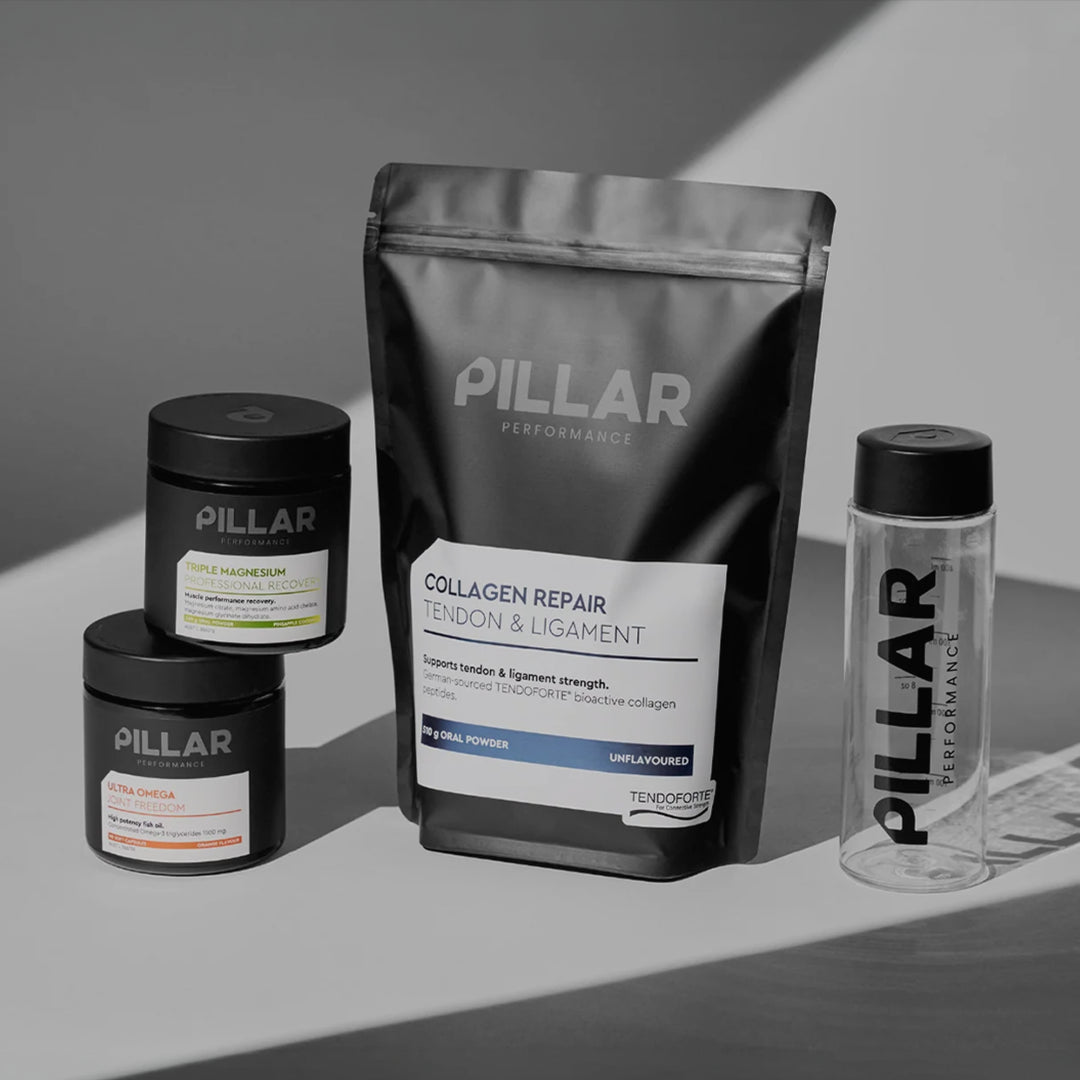
The summer break is almost here. Plenty of gyms run reduced hours over Christmas and New Year, the routine goes out the window, and lots of us swap the squat rack for the beach, the bach or the campsite for a week or three. Every December we get the same question in store: "If I take a few weeks off, how much muscle am I actually going to lose?"
The honest answer is probably a lot less than you think. This guide covers how long it takes to lose muscle and strength according to the research, the minimum training it takes to hold onto your gains over the holidays, and how to handle protein, creatine and the silly season so you come back in January ready to pick up where you left off.
Keeping Your Gains Over the Break at a Glance
| Question | Short Answer |
|---|---|
| Will a few weeks off ruin my progress? | Unlikely. In one study, young men who took 3-week breaks ended up with similar muscle and strength gains to those who trained straight through. |
| What's the least I can do to maintain? | Research suggests younger adults can maintain strength and muscle size with as little as 1 session a week, if the weights stay heavy. |
| What matters most when I cut back? | Intensity. Keep the load and effort up, even if you do fewer sessions and sets. |
| How much protein should I keep eating? | 1.4–2.0g per kg of body weight a day, in 20–40g doses every 3–4 hours. |
| Should I keep taking creatine? | Yes if you can. Stores take 4–6 weeks to drop back to baseline after you stop, and 3–5g a day maintains them. |
| Does alcohol affect recovery? | In one study, heavy drinking after training cut muscle protein synthesis by 24%, even with protein. |
How Long Does It Take to Lose Muscle?
When you stop training, you don't wake up a week later having lost everything. Your body adapts back down gradually, and how fast that happens depends on how long you're off, how old you are and how trained you were to begin with.
The biggest look at this is a 2013 meta-analysis by Bosquet and colleagues, which pooled 103 studies on what happens when people stop resistance training. The key findings:
- Stopping training does reduce strength. Submaximal strength, maximal strength and power all dropped after training stopped.
- The longer the break, the bigger the drop. The researchers found a dose-response relationship between how long people stopped for and how much performance they lost.
- Power held up best. Of the three measures, maximal power showed the smallest decline.
- Age and training history matter. The losses were larger in people over 65, and larger in inactive people than in recreational athletes for maximal force and power.
So yes, a long layoff costs you something. But a short holiday break is a very different thing from months off.
What Happens After a 3-Week Break?
One of the most reassuring studies for anyone heading away over summer comes from Ogasawara and colleagues in 2013. Fourteen young men did heavy bench press training three days a week. One group trained continuously for 24 weeks. The other group did three 6-week blocks of training, with a 3-week break between each block.
After 24 weeks, the overall gains in muscle size and strength were similar between the two groups. The group taking breaks also made bigger gains than the continuous group during their second round of retraining, which helped them catch up. It's a small study in previously untrained men doing one exercise, so we wouldn't stretch it too far, but it suggests a few weeks off doesn't undo months of work.
Strength Hangs Around Longer Than You Think
A 2011 trial by Bickel and colleagues put 70 adults through 16 weeks of resistance training three days a week, then followed them for another 32 weeks. Some stopped training completely, while others dropped to either one-third or one-ninth of their original training.
Even in the group that stopped completely, most of the strength they gained was retained, with only a slight reduction by the final measurement. Muscle size was a different story, and that's where the reduced-training groups come in.
The Minimum You Need to Hold Onto Your Gains
If you can squeeze in even a little training over the break, the research is on your side. In the Bickel trial, both reduced training doses, including the one-ninth dose, preserved the muscle gained by adults aged 20–35. That wasn't the case for adults aged 60–75, who needed more to hold onto their muscle size, although their strength gains held up well.
A 2021 review by Spiering and colleagues pulled together the research on the minimum dose of exercise needed to maintain fitness when life gets busy. Their findings line up neatly with a holiday plan:
- Strength and muscle size: in younger people, maintained for up to 32 weeks with as little as one strength session a week and one set per exercise, as long as the relative load stays the same.
- Older adults: maintaining muscle size may take up to two sessions a week and 2–3 sets per exercise, again keeping the intensity up.
- Endurance: maintained for up to 15 weeks with as few as two sessions a week, or with volume cut by 33–66% (as little as 13–26 minutes a session), as long as intensity is kept up.
The review's main conclusion is the one to remember: intensity seems to be the key variable. You can cut back on how often you train and how many sets you do, but keep the weights heavy and the effort honest.
A Simple Holiday Maintenance Plan
Here's how we'd put that into practice if you're away or your gym's hours are cut back:
- 1–2 full-body sessions a week. If you're younger, one solid session is a reasonable minimum. If you're older, aim for two.
- Pick one big movement per area. A squat or leg press, a hinge like a deadlift or hip thrust, a press and a pull.
- Do fewer sets, not lighter sets. One to three hard working sets per exercise, using the sort of loads you normally lift.
- Keep some cardio in. Two shorter, harder sessions a week, like intervals or a hilly run, will help cover your fitness.
- Check for a gym near where you're staying. A casual visit or two makes those heavy sessions easy.
If you can't get near a gym at all, don't stress. Stay active with swimming, walking, tramping and bodyweight work, and remember the Ogasawara study: a few weeks off isn't the end of the world. Rest has its place too, which we cover in why rest is essential in your fitness routine.
Keep Your Protein Up, Even When Training Drops
Holidays are when protein intake tends to slide. Breakfast becomes a pastry, lunch is fish and chips, and before you know it you're running on chippies and pavlova. If you want to hold onto muscle, protein is the nutrition habit worth protecting.
The International Society of Sports Nutrition's position stand on protein recommends 1.4–2.0g of protein per kg of body weight per day for building and maintaining muscle in most people who exercise. It also suggests doses of 20–40g (or about 0.25g per kg), spread evenly every 3–4 hours. For an 80kg person, that's 112–160g of protein a day across three or four meals or snacks. Our guide to how much protein you need helps you work out your own number.
The trick on holiday is having protein that doesn't need a kitchen or a plan:
- MusclePharm Combat Ready Protein Shakes give you 40g of protein from a casein and whey blend in each 500ml bottle, with no added sugar. The resealable bottle is handy for road trips. Browse more in our protein RTDs range.
- Quest Nutrition Protein Bars use a milk protein isolate and whey protein isolate blend, with less than 1g of sugar and plenty of fibre. A box in the car or chilly bin makes the gaps between meals easy. Check the label of your flavour for exact figures.
- Smartshake Original 2Go Shaker is a 600ml shaker with two detachable storage containers (100ml and 150ml), so you can pack your protein powder and creatine without taking the whole tub.
For more grab-and-go ideas, see our best protein snacks guide or the full protein snacks range.
Should You Keep Taking Creatine Over the Break?
We get asked this all the time. The short answer is yes, if it's easy for you to keep going. Creatine works by keeping your muscle stores topped up rather than giving you an instant hit before a workout, so consistency matters more than timing.
According to the ISSN position stand on creatine, once your stores are full, 3–5g a day is generally enough to keep them there. The same paper notes that after you stop, it generally takes 4–6 weeks for muscle creatine to return to baseline. So if you forget the tub for a week at the bach, you haven't lost your progress. But if taking it daily is easy, you'll come back in January with your stores still full.
- Swoleys Sour Creatine Monohydrate Gummy Bears give you a full 5g of creatine monohydrate per serve in sour gummy form, independently lab tested for dosage. No scoop, no shaker, no mess, which makes them easy to travel with.
- Nexus Creatine Monohydrate is a pure, unflavoured 5g-per-serve creatine monohydrate that mixes into water, juice or your protein shake. The 150g tub (30 serves) is a good size to pack.
You'll find more options in our creatine range, and if you've heard you need to "cycle off" creatine, our article on creatine myths Kiwis still get wrong clears that one up.
Alcohol, Christmas Parties and Your Gains
We're not here to tell anyone to skip the work do. But it's worth knowing what a big night can do to your recovery, especially if you've trained that day.
In a 2014 study by Parr and colleagues, eight physically active men did a hard combined weights and cycling session, then drank a large amount of alcohol, about 12 standard drinks on average, over the following hours. Even when they also had 25g of whey protein straight after training and again 4 hours later, their rate of muscle protein synthesis was 24% lower than when they had protein without alcohol. When the alcohol was paired with carbohydrate instead of protein, it was 37% lower.
That's one small study looking at a single heavy session, not a few quiet beers. But the practical message is clear: if you're having a big night, get your protein in anyway, and don't make every training day a drinking day.
For perspective, New Zealand's low-risk drinking advice suggests at least two alcohol-free days each week, and no more than two standard drinks a day (10 a week) for women or three a day (15 a week) for men. In New Zealand, a standard drink contains 10g of pure alcohol, and a common serve at a bar is often more than one.
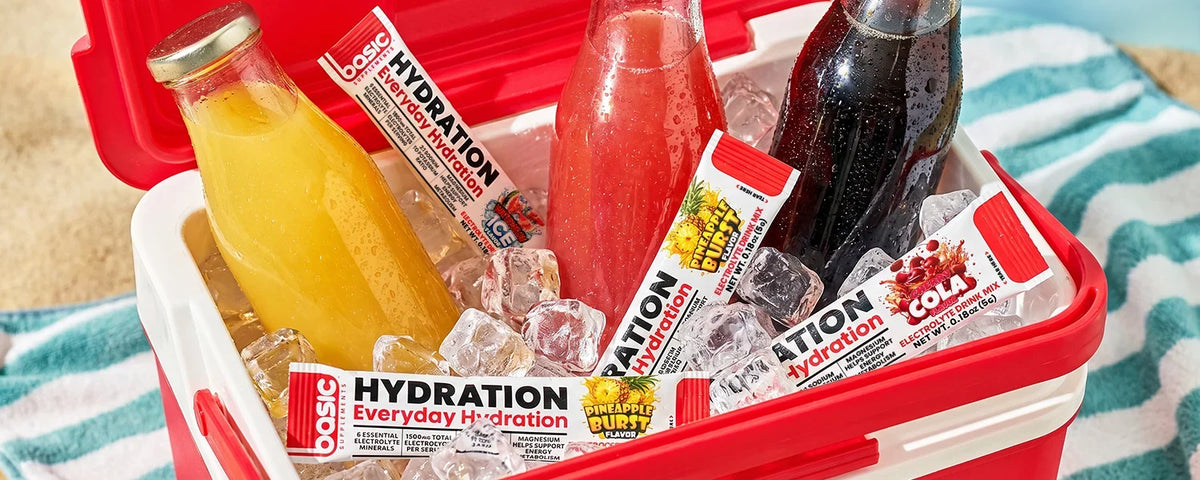
Long, hot days outdoors also mean plenty of sweating. On those days, water with an electrolyte mix like Basic Supplements Hydration is a simple option. It's a zero-sugar mix with sodium, potassium and magnesium in 5g stick packs that fit in a beach bag. Mix one with 250–500ml of water. More options are in our electrolytes and hydration range.
Coming Back in January
If you do take a full break, ease back in. Start your first week back with lighter loads and fewer sets than you finished on, then build back up over a couple of weeks. In the Ogasawara study, gains during retraining after a 3-week break matched those from the first block of training. If you're older, it's worth putting more emphasis on staying consistent through the break, since the research suggests older adults need a bit more training to hold onto muscle. Our guide to the best supplements for preserving muscle as you age covers that in more detail.
The Bottom Line
How long does it take to lose muscle? Longer than most people fear. Strength and muscle do decline when you stop training, and more so the longer you're off, if you're older or if you're less trained. But the research suggests a short summer break won't undo your progress, and that as little as one or two heavy sessions a week can maintain what you've built.
Keep the intensity up, keep your protein at 1.4–2.0g per kg a day, keep taking your creatine if it's easy, and go easy on the big nights. Enjoy the break. Your gains will still be there when you get back. Got questions about staying on track over summer? Chat with the team in store or online, we're always happy to help.
References
- Bickel CS, Cross JM, Bamman MM (2011). Exercise dosing to retain resistance training adaptations in young and older adults. Medicine & Science in Sports & Exercise.
- Bosquet L, Berryman N, Dupuy O, Mekary S, Arvisais D, Bherer L, Mujika I (2013). Effect of training cessation on muscular performance: a meta-analysis. Scandinavian Journal of Medicine & Science in Sports.
- Health New Zealand | Te Whatu Ora (n.d.). Standard drinks and legal limits. Amohia te Waiora (alcohol.org.nz).
- Jäger R et al. (2017). International Society of Sports Nutrition Position Stand: protein and exercise. Journal of the International Society of Sports Nutrition.
- Kreider RB et al. (2017). International Society of Sports Nutrition position stand: safety and efficacy of creatine supplementation in exercise, sport, and medicine. Journal of the International Society of Sports Nutrition.
- Ogasawara R, Yasuda T, Ishii N, Abe T (2013). Comparison of muscle hypertrophy following 6-month of continuous and periodic strength training. European Journal of Applied Physiology.
- Parr EB et al. (2014). Alcohol ingestion impairs maximal post-exercise rates of myofibrillar protein synthesis following a single bout of concurrent training. PLoS ONE.
- Spiering BA, Mujika I, Sharp MA, Foulis SA (2021). Maintaining physical performance: the minimal dose of exercise needed to preserve endurance and strength over time. Journal of Strength and Conditioning Research.
- Product information: ASN product listings and manufacturer labels.
This article is general information only and isn't a substitute for medical advice. If you have a health condition, are pregnant or take medication, check with your GP before starting any new supplement.
Leave a comment
All comments are moderated before being published.
This site is protected by hCaptcha and the hCaptcha Privacy Policy and Terms of Service apply.