

It's early October, which means summer is about eight weeks away. Christmas parties, beach days and the first proper barbecue of the year are all on the calendar. If you've been meaning to drop some body fat before then, now is the time to start. Leave it until December and the plan turns into a crash diet.
This guide covers how to cut for summer the realistic way. That means losing fat steadily, keeping the muscle you've worked for, and finishing in December feeling good rather than flat, hungry and over it. No detoxes, no 1,000-calorie days, and no promises of a six-pack in a fortnight. Just a plan that works for real people with jobs, families and a social calendar that gets busier as the year ends.
What Does "Cutting" Actually Mean?
Cutting means losing body fat while holding on to as much muscle as possible. The difference matters. Crash dieting makes the scale drop quickly, but a good chunk of that weight comes from muscle and water. You end up smaller, softer and weaker, and the fat tends to come straight back when normal eating resumes.
A proper cut rests on four pillars. You eat in a moderate calorie deficit, keep protein high, keep lifting heavy, and recover well. Get those four right and supplements become the helpful extra they're meant to be, not a crutch.
How Much Can You Realistically Lose in 8 Weeks?
A sustainable rate of fat loss is roughly 0.5–1% of your bodyweight per week. Lean people should aim for the lower end so they don't lose muscle. Those with more to lose can usually go towards the upper end comfortably.
| Starting bodyweight | Weekly loss (0.5–1%) | Realistic 8-week result |
|---|---|---|
| 60 kg | 0.3–0.6 kg | 2.5–5 kg |
| 75 kg | 0.4–0.75 kg | 3–6 kg |
| 90 kg | 0.45–0.9 kg | 3.5–7 kg |
Expect a quicker drop in the first week. That's mostly water and stored carbohydrate rather than fat, so don't use it to judge your progress. From week two onwards, the numbers in the table are what you're aiming for. Losing 3–6 kg of actual fat in eight weeks makes a visible difference, especially if you've kept your muscle.
Step 1: Set Your Calorie Deficit
Every cut comes down to a calorie deficit, which means eating slightly less energy than you burn. Supplements, meal timing and "clean eating" can't get around this. They can only make the deficit easier to stick to.
For a rough starting point, multiply your bodyweight in kilograms by 30–33 to estimate your maintenance calories if you're moderately active. Then subtract 300–500 calories a day. For a 75 kg person, that's roughly 2,300 calories at maintenance and 1,800–2,000 calories on a cut. New Zealand food labels list energy in kilojoules, so it helps to know that 500 calories is about 2,100 kJ.
Treat that number as a starting estimate, not gospel. Weigh yourself first thing each morning, take the weekly average, and adjust after two weeks:
- Losing faster than 1% a week? Add 100–200 calories back in. Losing too fast puts muscle on the line.
- Losing nothing after two full weeks? Cut a further 150–200 calories, or add 2,000 extra steps a day.
- Losing 0.5–1% a week? Change nothing. Boring is good.
Step 2: Lock In Your Protein
If calories decide whether you lose weight, protein decides what kind of weight you lose. A high protein intake protects muscle in a deficit. It's also the most filling macronutrient, which helps when you're eating less than you'd like.
Aim for 1.6–2.2 g of protein per kilogram of bodyweight each day. During a cut, sit towards the top of that range. Our protein guide by bodyweight and goal breaks down your exact target.
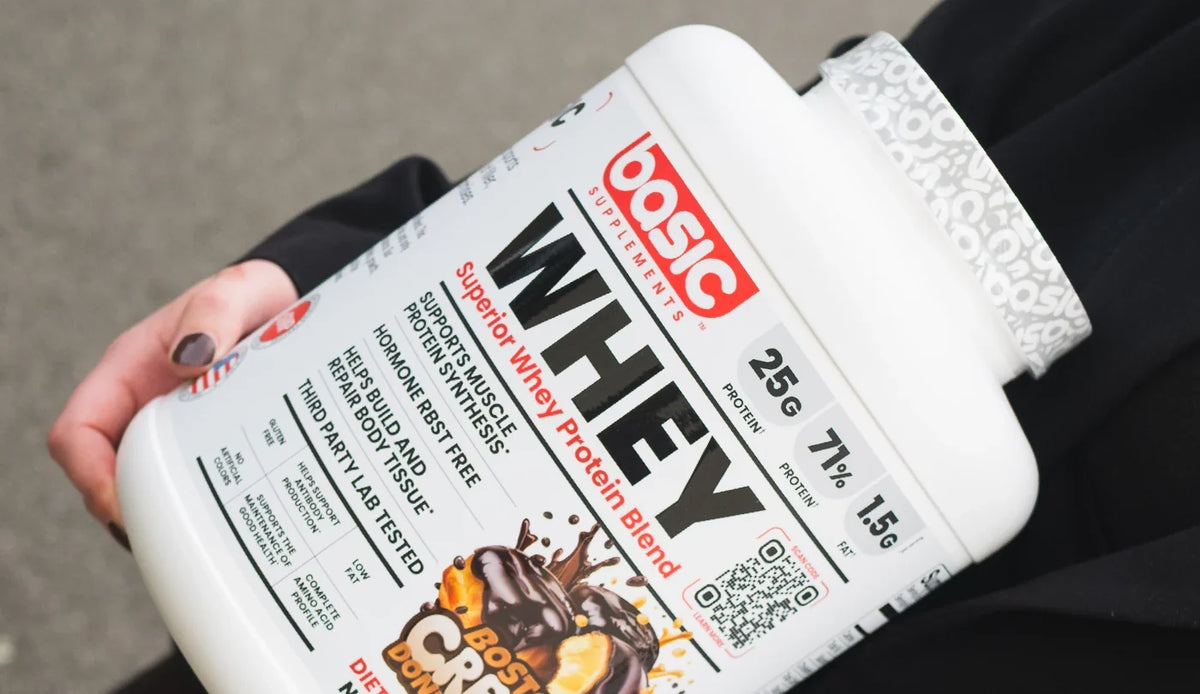
For most people, hitting that number from food alone is hard work, and a good protein powder makes it far easier. Basic Supplements Whey Isolate is a strong fit for a cut. Isolate is filtered to remove most of the fat, carbohydrate and lactose, so you get more protein for fewer calories, and it's gentle on sensitive stomachs. If you're not sure whether you need isolate over a standard whey, our whey vs isolate comparison explains the trade-offs.
As the weather warms up, a thick milkshake-style protein drink isn't always appealing. Nexus Super Protein Water mixes up light and juice-like at around 90 calories a serve. It's collagen-based, so treat it as a top-up between meals rather than your main protein source. Your whey and whole foods should still do the heavy lifting. For grab-and-go options that keep hunger in check, see our ranking of the best protein snacks in NZ.
Step 3: Keep Lifting Heavy
The biggest training mistake on a cut is swapping heavy weights for light weights and high reps to "tone up". Lifting heavy is the signal that tells your body to keep its muscle. Take that signal away while eating less, and muscle becomes something the body can spare.
- Train with weights 3–4 times a week and aim to keep your working weights where they were before the cut. Holding your strength is a win in a deficit.
- Reduce volume slightly if recovery suffers. One fewer set per exercise is better than skipping sessions.
- Walk more. Getting 8,000–10,000 steps a day burns a meaningful amount of energy without eating into your recovery the way extra hard cardio does.
- Keep cardio as a tool, not a punishment. Two or three moderate sessions a week is plenty for most people.
Creatine is especially useful here. It helps you keep training intensity and strength while you're eating less. Nexus Creatine Monohydrate is pure, unflavoured and simple to use: take 5 g a day, every day, mixed into your protein shake or water. You may see a small rise on the scale in the first week, which is water stored inside the muscle, not fat. Our best creatine NZ ranking covers more options.
Your 8-Week Summer Cut Game Plan
| Weeks | Focus | What to do |
|---|---|---|
| 1–2 | Set up | Set your calories and protein targets, start tracking, take progress photos and measurements, and begin daily creatine. |
| 3–4 | First check-in | Review your two-week weigh-in average, adjust calories if needed, and push your daily steps up. |
| 5–6 | Stay the course | Hunger usually peaks here. Lean on high-volume foods, protein snacks and appetite support. Keep training loads steady. |
| 7–8 | Finish strong | Plan around work functions, keep protein high, prioritise sleep, and compare photos to week one rather than relying only on the scale. |
Step 4: Sleep, Hydration and the Things That Break Diets
Short sleep makes everything harder. It increases hunger, lowers training performance and makes the 3 pm biscuit tin far more tempting. Aim for 7–9 hours a night, and protect it by cutting off caffeine by early afternoon.
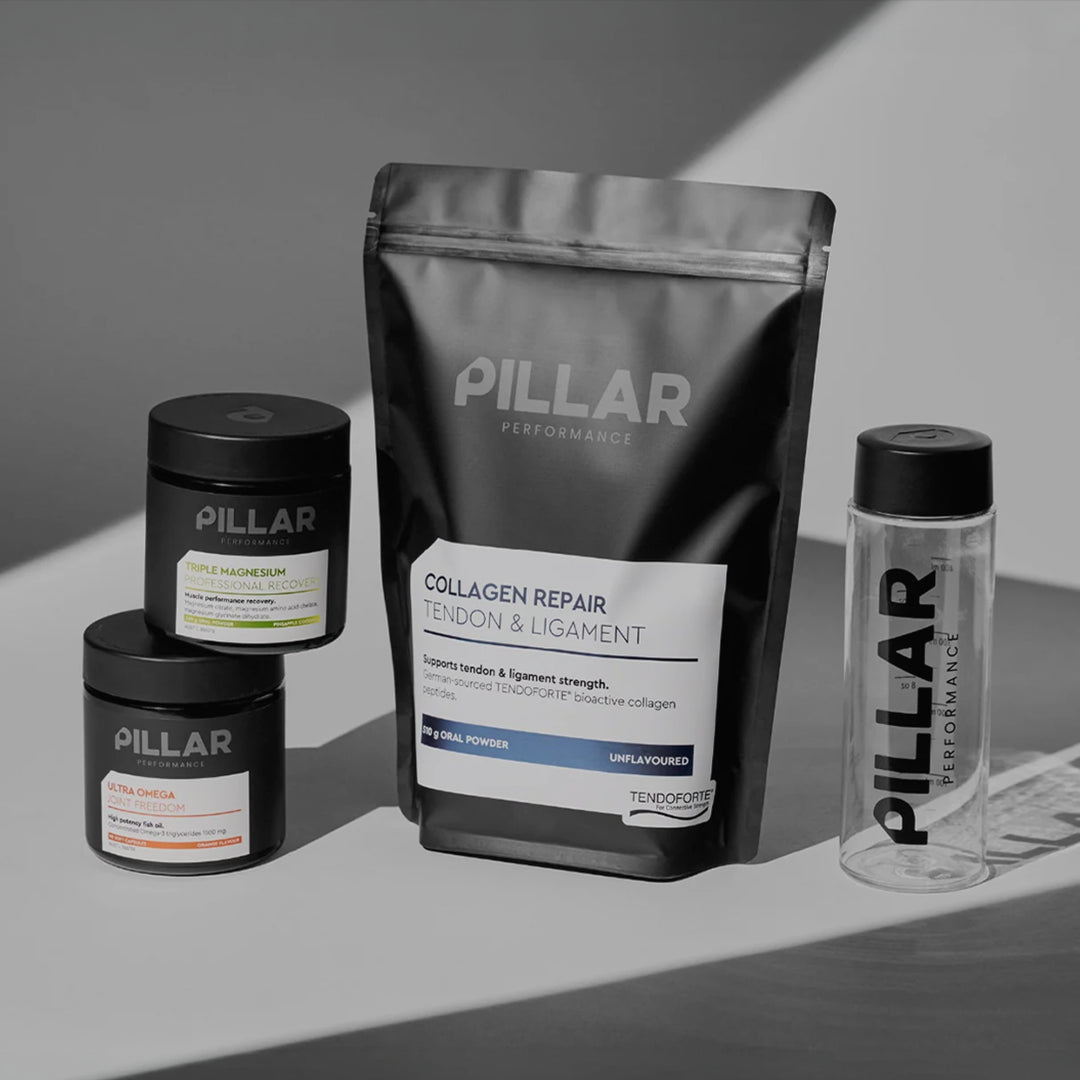
Magnesium is worth adding if your sleep or recovery starts to slip. Pillar Performance Triple Magnesium Powder combines three forms of magnesium in an easy evening drink and is Informed Sport certified. If you're not sure whether you're low in it, our guide to magnesium deficiency symptoms is a good place to start.
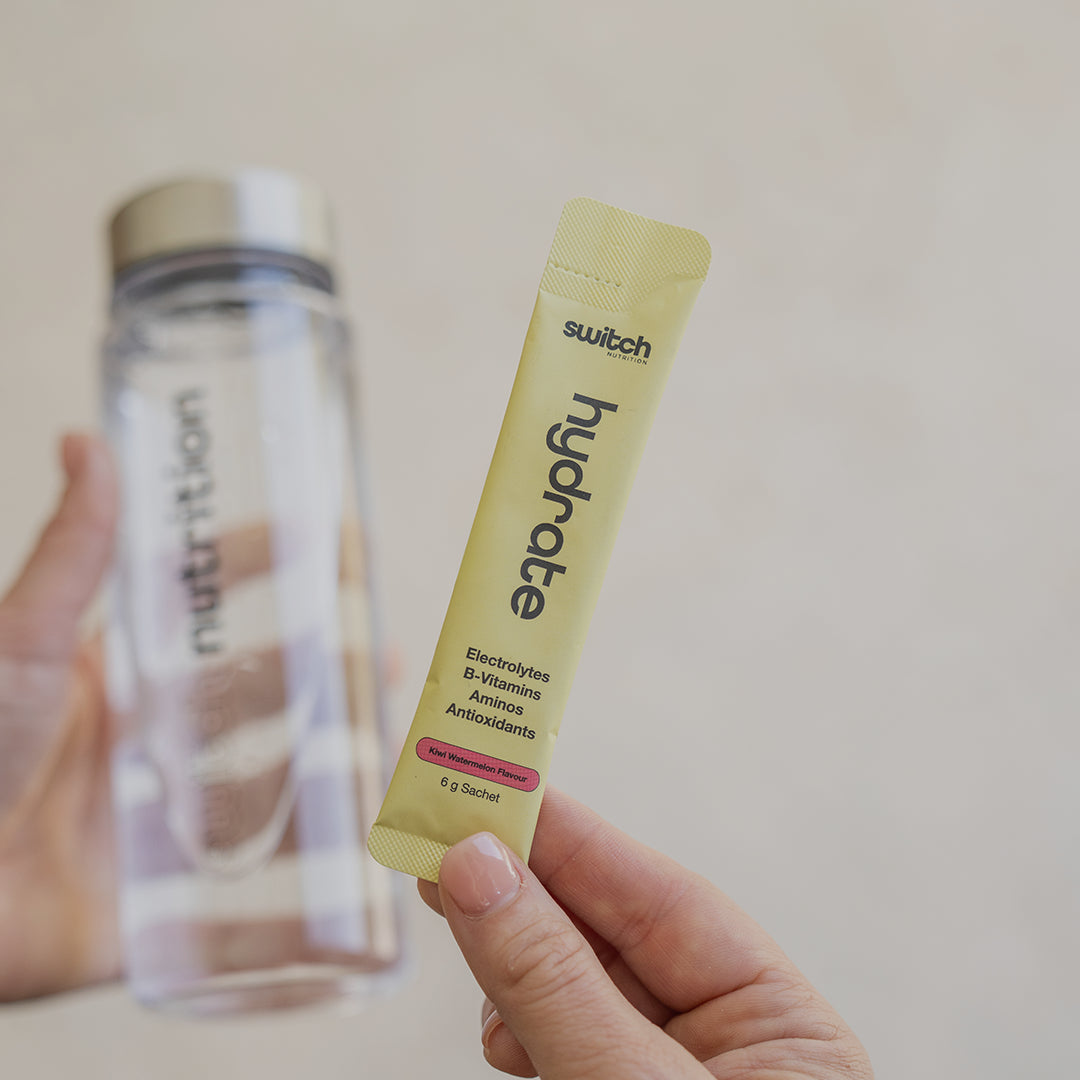
Hydration matters more as the weather warms up and training gets sweatier. Aim for 2–3 litres of water a day. If you're training hard or sweating a lot, add an electrolyte. We've ranked the best electrolytes in NZ if you need a starting point.
Then there's December. Work dos, end-of-year drinks and Christmas catch-ups can undo a week of good eating in one evening. You don't need to skip them. Just plan ahead: eat a protein-heavy meal beforehand, alternate drinks with water, and get straight back on track the next morning rather than writing off the week.
Where Supplements Fit In
Be honest about this part. Supplements don't create fat loss; your calorie deficit does. What a well-formulated fat burner can do is make that deficit easier to live with, through steadier energy, fewer cravings and a bit more drive in the gym when motivation is low.
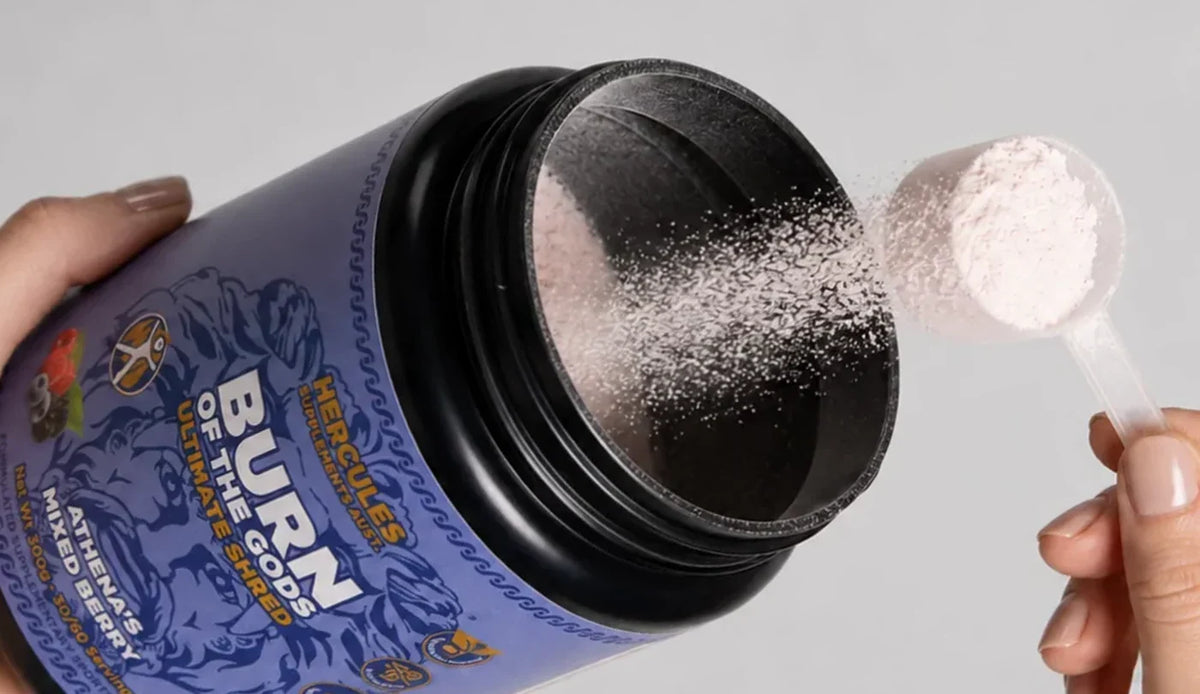
Hercules Burn of the Gods is built specifically around the hardest part of a cut, which is appetite. Each two-scoop serve contains 500 mg of DNF-10® and 2,000 mg of apple cider vinegar powder to help manage hunger. Its dual-release caffeine gives a quick lift followed by slower, longer-lasting energy, so you avoid one big spike and crash. The formula is fully transparent with every dose on the label. At 170 mg of caffeine per scoop, start with one scoop to test your tolerance, take it in the morning or before training, and don't stack it with a high-stimulant pre-workout.
If you're sensitive to caffeine, Nexus EasyBurn is the lighter option. It contains 150 mg of caffeine buffered with L-theanine, plus 2,000 mg of acetyl L-carnitine. For the full rundown, read our best fat burner NZ 2026 rankings. To see how everything fits together, our guide to supplement stacks for cutting and fat loss covers the combinations, or browse the full lose body fat collection.
Got More Than 8 Weeks? Stretch It to 12
If you're starting early, a 12-week cut lets you run a smaller deficit and keep more muscle. A simple way to phase your supplements:
- Weeks 1–4: Build the foundation. Protein powder to hit your daily target and creatine every day. Nothing else yet.
- Weeks 5–8: Add support as the deficit bites. This is when energy and hunger start to drag, so it's the right time to add a fat burner (or a stim-free option if you're sensitive to caffeine) and stay on top of electrolytes.
- Weeks 9–12: Hold the line. Protein snacks and RTDs make it easier to stay on plan when you're busy or hungry. Keep recovery, sleep and hydration tight, because they matter more late in a cut, not less.
Common Cutting Mistakes to Avoid
- Cutting calories too hard, too early. Start moderate. You need room to adjust later when progress slows.
- Letting protein slide. On busy days, protein is usually the first thing to go. Keep a shake or protein snack on hand so it doesn't.
- Judging progress daily. Scale weight moves up and down with salt, carbs, water and stress. Use weekly averages, photos and how your clothes fit.
- Doubling up on stimulants. A fat burner, pre-workout and two energy drinks in one day is a recipe for poor sleep and a stalled cut.
- Going all or nothing. One off-plan meal isn't the problem. Treating it as a reason to give up for the week is.
Frequently Asked Questions
Is 8 weeks enough time to cut for summer?
Yes. Eight weeks is enough to lose a meaningful amount of fat, typically 3–6 kg for most people, while keeping your muscle. If you have more to lose, use this as phase one and keep going into the new year.
Should I stop taking creatine while cutting?
No. Creatine helps you hold on to strength and training intensity while eating less, which is exactly what you want on a cut. The small amount of water it pulls into the muscle isn't fat.
Do I need a fat burner to cut?
No. Plenty of people cut successfully without one. A fat burner is optional support for appetite and energy, not a requirement. If you have a medical condition, take prescription medication, or are pregnant or breastfeeding, talk to your GP before using any stimulant-based product. Fat burners aren't suitable for anyone under 18.
What should I do after summer?
Increase your calories gradually to your new maintenance level over two to three weeks rather than jumping straight back to your old intake. Keep lifting and keep protein high, and you'll hold on to most of what you've achieved.
The Bottom Line
Learning how to cut for summer isn't about finding a secret. It's about doing the basics consistently for eight weeks. Set a moderate calorie deficit, hit your protein every day, keep lifting heavy, sleep properly and walk more. Add supplements where they genuinely make the process easier: a lean isolate for protein, creatine to protect strength, magnesium for recovery, and a fat burner if appetite is your weak point.
Start this week and you'll go into the Christmas break leaner, stronger and still enjoying your food. That's a far better result than a crash diet in December.

Leave a comment
All comments are moderated before being published.
This site is protected by hCaptcha and the hCaptcha Privacy Policy and Terms of Service apply.