


If you've been training consistently and suddenly find it harder to recover, maintain muscle, or stay motivated to push in the gym, you're not imagining it. After 30, your body undergoes a measurable shift in hormones, recovery capacity, and nutrient absorption. Testosterone begins its gradual decline, collagen synthesis slows, and the anabolic response to training becomes less efficient. The good news? The right supplements for men over 30 can help you close that gap, train harder, and feel better doing it.
This guide breaks down exactly what your body needs after 30, which supplements are worth your money, and how to build a stack that supports strength, hormones, and recovery — the three pillars that matter most as you age as an athlete.
What Supplements Does Your Body Need After 30?
The shift after 30 isn't dramatic overnight, but it's consistent. Here's what's changing physiologically — and what to do about it:
1. Testosterone and Hormone Support
From your early 30s, testosterone levels decline by roughly 1–2% per year. This affects muscle protein synthesis, recovery speed, libido, energy, and mood. While lifestyle factors like sleep, stress management, and resistance training are the foundation, certain natural compounds have well-documented effects on supporting healthy testosterone levels.
Ingredients like ashwagandha, zinc, magnesium, and tribulus have shown promise in clinical studies for supporting natural hormone production, particularly in men who are training hard and potentially running low on key micronutrients. Explore testosterone boosters and hormone support supplements if optimising your hormonal health is a priority.
2. Protein and Muscle Protein Synthesis
After 30, you need more dietary protein to stimulate the same level of muscle protein synthesis as you did in your 20s — a phenomenon researchers call "anabolic resistance." This means hitting your protein targets becomes more important, not less. If you're training regularly, most evidence supports a target of 1.6–2.2g of protein per kilogram of bodyweight daily.
A high-quality protein supplement makes hitting those numbers significantly easier, especially around training when whole-food sources aren't always practical. Browse protein powder options to find a formula that fits your dietary needs and preferences.
3. Joint and Connective Tissue Health
Cartilage doesn't repair itself the way muscle does. After years of training, the cumulative load on your joints — knees, shoulders, hips, elbows — starts to make itself known. Collagen synthesis also slows with age, meaning the structural protein that holds your joints, tendons, and ligaments together is being produced less efficiently.
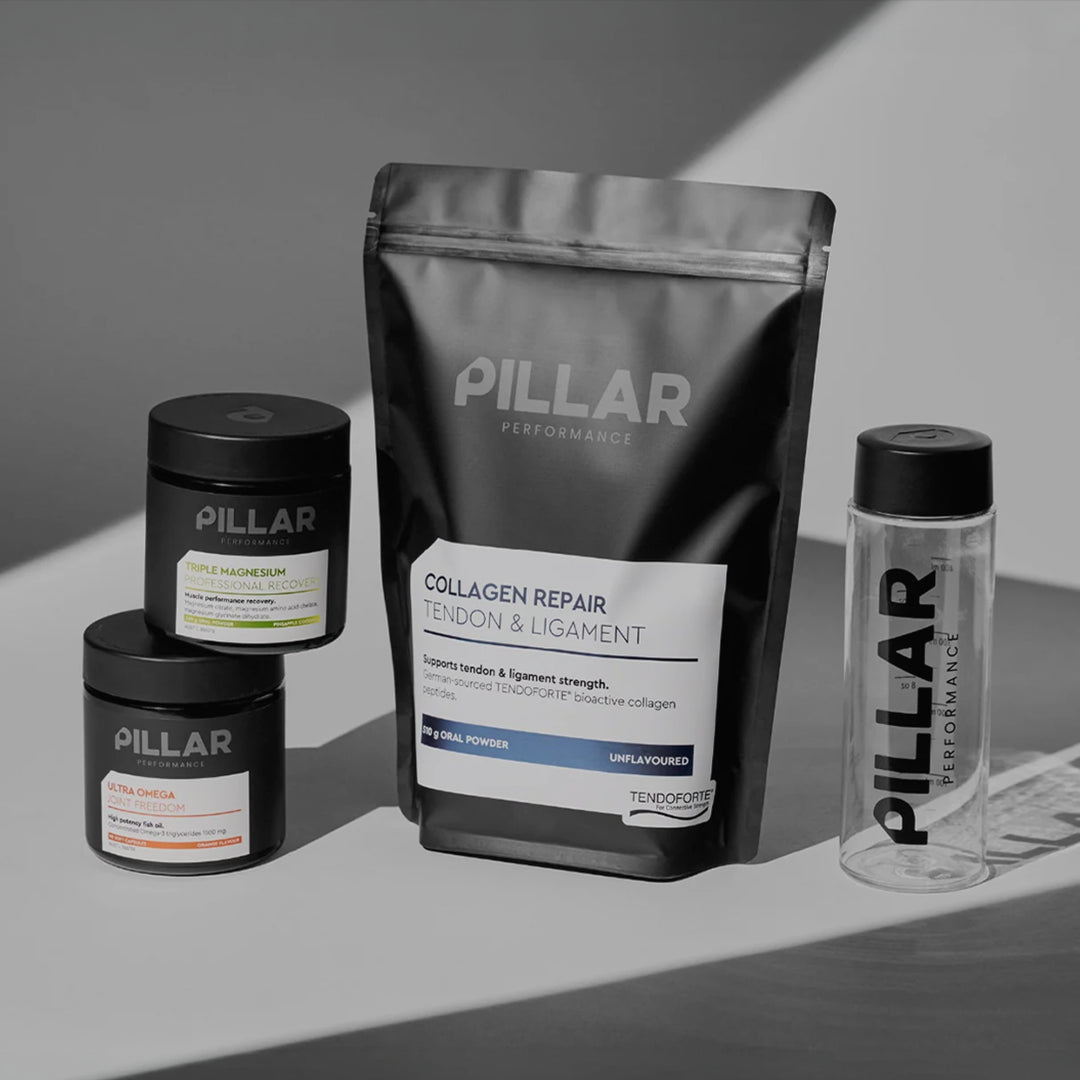
This makes collagen and joint support one of the most underrated areas of supplementation for anyone training into their 30s and beyond. Collagen peptides, glucosamine, chondroitin, and MSM are among the most studied compounds for joint health and connective tissue integrity. Check out collagen and joint support supplements to protect the body that keeps you training.
4. Recovery
Recovery takes longer after 30 — that's not weakness, it's biology. Inflammation from training resolves more slowly, sleep quality tends to decline, and the window between sessions where tissue repair happens is more sensitive to disruption. Supplements that support recovery — including magnesium, omega-3 fatty acids, tart cherry extract, and adaptogens — can meaningfully reduce soreness and improve the quality of your rest. View the full range of recovery supplements designed to help you bounce back faster.
What Are the Big 3 Supplements?
When it comes to evidence-based supplementation for strength and physique, three supplements consistently rise above the rest in terms of research support and real-world results. If you're going to start anywhere, start here.
1. Creatine Monohydrate
Creatine is arguably the most researched performance supplement in existence, with decades of peer-reviewed data supporting its effectiveness for increasing strength, power output, and lean muscle mass. It works by replenishing phosphocreatine stores in muscle, allowing you to sustain high-intensity efforts for longer — more reps, heavier weights, better training stimulus.
After 30, creatine takes on additional relevance. Research suggests it may also support cognitive function, bone density, and even help offset some of the natural decline in muscle mass that comes with ageing. The standard dose is 3–5g per day, with no need for a loading phase. Shop creatine supplements — this is one you simply shouldn't be without.
2. Protein (Whey or Plant-Based)
As covered above, protein requirements increase with age and training intensity. Whey protein, in particular, is rich in leucine — the key amino acid that triggers muscle protein synthesis — and is rapidly absorbed post-training, making it one of the most effective tools for building and maintaining muscle mass.
For those with dairy sensitivities or who follow a plant-based diet, modern plant protein blends (often combining pea, rice, and hemp) have closed the gap significantly on amino acid profiles. The key metric is total daily protein intake, and a quality supplement makes hitting that target consistent and convenient. Explore the full protein powder range to find your ideal match.
3. Omega-3 Fatty Acids (Fish Oil)
Often overlooked in favour of more glamorous supplements, omega-3s are foundational for anyone training over 30. EPA and DHA — the active forms found in fish oil — have strong evidence for reducing exercise-induced inflammation, supporting cardiovascular health, improving joint comfort, and even contributing to muscle protein synthesis when combined with adequate protein intake.
Most people are significantly under-consuming omega-3s relative to the omega-6 fats dominating modern diets. A daily fish oil or algae-based omega-3 supplement can help rebalance this ratio and keep inflammation from blunting your recovery and performance. Shop omega-3 and fish oil supplements to cover this essential nutritional foundation.
Building Your Over-30 Supplement Stack
Rather than buying every supplement you come across, a focused, strategic stack is far more effective. Here's a framework for the best supplements after 30, structured around your key goals:
Foundation Stack (Non-Negotiables)
- Creatine monohydrate – 3–5g daily, any time of day
- Protein powder – to meet your daily protein target (1.6–2.2g/kg)
- Omega-3 / fish oil – 2–3g of combined EPA/DHA daily
Recovery and Longevity Layer
- Magnesium – supports sleep quality, muscle relaxation, and hundreds of enzymatic processes
- Collagen peptides – best taken with vitamin C around training to support connective tissue synthesis
- Tart cherry or curcumin – natural anti-inflammatory support for reducing delayed onset muscle soreness (DOMS)
Browse the full recovery supplement range and collagen and joint support options to build out this layer of your stack.
Hormone Optimisation Layer
- Ashwagandha (KSM-66 or Sensoril) – clinically studied for reducing cortisol and supporting testosterone levels under training stress
- Zinc and magnesium (ZMA) – two minerals commonly depleted through sweat and stress, both critical for healthy testosterone production
- Vitamin D3 – strongly associated with testosterone levels; most people in New Zealand are deficient, particularly through winter months
Explore the full range of testosterone boosters and hormone support supplements to find what's right for your goals.
Lifestyle Factors That Amplify Your Supplements
No supplement stack outperforms poor fundamentals. If you're investing in quality supplements, make sure the basics are locked in:
- Sleep: 7–9 hours is where the majority of growth hormone is released and tissue repair happens. Supplements like magnesium and ashwagandha directly support this.
- Training programming: Compound lifts — squat, deadlift, bench, row — continue to be the most powerful stimulus for testosterone and muscle retention after 30.
- Stress management: Elevated cortisol directly suppresses testosterone. Adaptogens help, but addressing the source matters more.
- Nutrition: Calorie and protein targets are the infrastructure. Supplements fill the gaps.
How to Choose Quality Supplements
Not all supplements are created equal, and the industry is rife with underdosed products, proprietary blends that hide weak ingredient amounts, and label claims that outpace the evidence. When choosing supplements for men over 30, look for:
- Clinically dosed ingredients — amounts that match what was used in the studies supporting the product
- Third-party testing — look for Informed Sport, NSF, or similar certifications, especially if you compete
- Transparent labels — no proprietary blends hiding individual ingredient doses
- Reputable brands — companies with a track record, not fly-by-night operations
At ASN Online, every product in the range is stocked with these standards in mind. Whether you're building your foundation or optimising an existing stack, explore the full health and wellness range for supplements you can trust.
The Bottom Line
Training over 30 isn't about working harder — it's about working smarter. Your body is capable of extraordinary things well into your 30s, 40s, and beyond, but it responds differently to training stress and needs more deliberate nutritional and recovery support to keep progressing.
The best supplements after 30 aren't magic pills — they're tools that complement intelligent training, adequate sleep, and a solid diet. Start with the big three (creatine, protein, and omega-3s), layer in recovery and joint support, and consider hormone-supporting compounds if energy, drive, and performance feel like they've dipped.
Done right, your supplement stack becomes a meaningful edge — one that keeps you training consistently, recovering fully, and building the body you're after for the long term.


Leave a comment
All comments are moderated before being published.
This site is protected by hCaptcha and the hCaptcha Privacy Policy and Terms of Service apply.